Research
admin2025-09-01T05:17:41+00:00
Clinical Evidence Proves Circumplast is the Safer Choice
Proven by Research: Circumplast Leads in Safety & Comfort
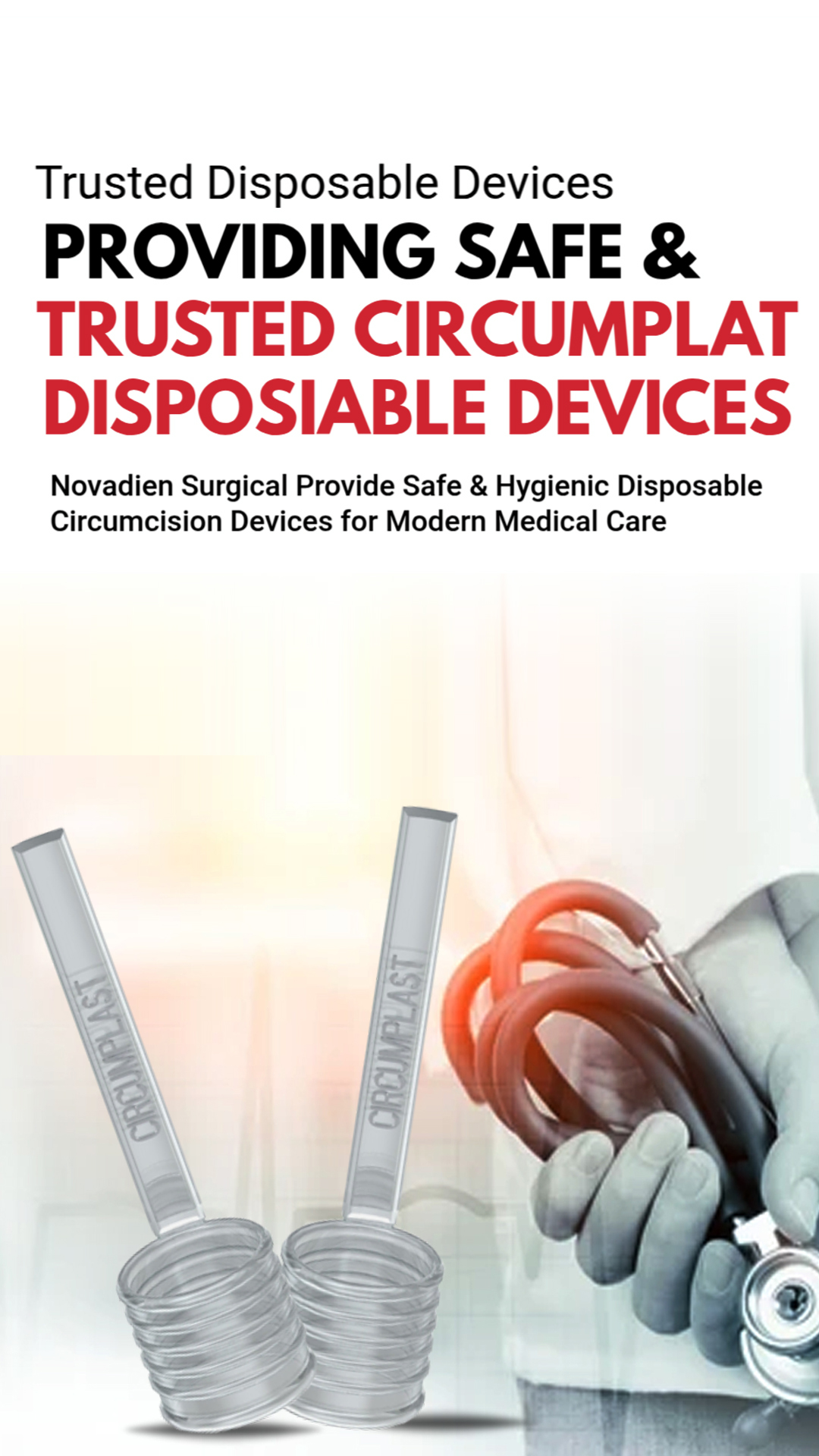
Extensive clinical studies and global usage reports highlight Circumplast as the safest and most effective disposable circumcision device. Research proves it offers lower complication rates, faster healing, and superior patient comfort compared to other methods. Healthcare professionals worldwide trust Circumplast for consistent, reliable outcomes.
Circumcision has long been recognized for its medical and hygienic benefits, with extensive documentation supporting its advantages. However, some medical literature continues to debate its necessity, particularly in children. Among the widely used devices for non-therapeutic circumcision in infants and children, Plastibell and Circumplast have remained the most popular.
Circumcision is one of the oldest and most widely practiced medical procedures in the world. With the evolution of surgical tools, healthcare has moved from traditional methods to modern disposable devices that focus on safety, sterility, and patient comfort. Among these innovations, Circumplast has emerged as a trusted solution, backed by clinical research and professional preference. Studies and real-world usage have shown that Circumplast offers safer, faster, and more reliable outcomes compared to other devices like Plastibell, Gomco Clamp, and Shang Ring.
Clinical Evidence Supporting Circumplast
Recent studies and clinical evaluations consistently highlight Circumplast’s superiority in the following areas:
Lower Complication Rates – Research proves Circumplast significantly reduces risks such as bleeding, infection, and delayed healing, making it safer for both infants and older patients.
Faster Recovery – Patients circumcised with Circumplast experience quicker healing times and reduced post-operative discomfort.
Better Patient Comfort – The design minimizes pain and irritation, improving the overall patient experience.
Enhanced Safety Standards – As a disposable and pre-sterilized device, Circumplast ensures zero cross-contamination, which is often a risk with reusable tools.
Trusted by Healthcare Professionals
Medical practitioners and hospitals worldwide are increasingly adopting Circumplast due to its proven clinical outcomes. Surgeons report shorter operation times, smoother procedures, and higher satisfaction rates among patients and their families. These positive results strengthen Circumplast’s reputation as the most reliable circumcision device available today.
Research and clinical evidence clearly establish Circumplast as the best circumcision device. Its innovative design, disposable sterility, and superior outcomes make it a safer and more effective choice compared to traditional and other disposable devices. As healthcare continues to embrace modern solutions, Circumplast is setting new standards in circumcision care, combining science, safety, and patient well-being.
Ongoing studies and clinical evaluations are crucial to determining the long-term safety and effectiveness of these devices. Factors such as complication rates, ease of use, and post-procedure healing must be thoroughly analyzed to provide healthcare professionals with clear guidance. Additionally, patient care protocols and parental awareness play a vital role in minimizing risks and ensuring optimal outcomes for infant circumcision procedures.
Wachtel MS, Yang S, and Morris BJ published their findings in the Asian Journal of Andrology in August 2015, originating from the School of Medical Sciences at the University of Sydney, located in Sydney, New South Wales, Australia. Countries with a high prevalence of circumcision exhibit lower rates of prostate cancer mortality. This study explored the correlation between the prevalence of male circumcision (MC) and the mortality rate from prostatic carcinoma across 85 countries worldwide, for which relevant data was accessible. The prevalence of MC in various nations was sourced from a WHO report and categorized into three groups: 81%-100%, 20%-80%, and 0%-19%. In comparison to countries with an MC prevalence of 81%-100%, those with an MC prevalence of 0%-19% and 20%-80% showed a higher mortality rate from prostatic carcinoma. Additionally, a higher percentage of Muslims for every 10% increase and an extended life expectancy for every five additional years were linked to a reduction in prostatic carcinoma mortality. Therefore, it can be concluded that prostate cancer mortality is significantly lower in nations where the prevalence of male circumcision surpasses 80%.
Bode C O, Ikhisemojie S, Ademuyiwa A O. Penile injuries due to the proximal migration of the Plastibell circumcision ring. J Paed Surg 2010; 6: 23-27 A total of twenty-three injuries linked to circumcision using the Plastibell device were reported, all stemming from the prolonged retention of the ring. In every instance, the ring was kept in place and had migrated proximally. Seventeen (74%) infants experienced significant skin loss. Urethrocutaneous fistulae developed in nine (39%) of these cases, while partial necrosis of the glans penis was noted in four (17%). These complications arose from the use of improperly sized Plastibell kits, insufficient follow-up by medical personnel, and a lack of maternal understanding regarding the timing of ring fall-out. The proximal migration of the Plastibell ring can lead to severe penile injuries due to the use of incorrect sizes. It is essential to provide mothers of circumcised infants with comprehensive information about the potential complications associated with the Plastibell kit. Additionally, there is a pressing need to redesign the Plastibell kit to prevent its migration along the penile shaft.
Cathcart P, Nuttall M, van der Meulen J, et al. Trends in paediatric circumcision and its complications in England between 1997 and 2003. Br J Surg. 2006; 93: 885–90.6 75 868 boys under the age of 15 were included in the study. Data was extracted from the Hospital Episode Statistics database for admission to NHS hospitals in England. The circumcision rate fell 20% from 1997 to 2003, to 2.1 per 1000 boys in 2003. Indications for circumcision: 90% phimosis, 8% balanitis, 2% other. 1.2% of boys experienced complications. The study excluded boys who had additional operative procedures at the time of circumcision. Only complications requiring prolonged hospital stay or readmission were included in the study; therefore, some minor complications were not included.